
DNR Trust Land Transfer program key to King Ranch battle
So much more than a simple act of Sagebrush Rebellion

As reported in general media for the last three years, the King Ranch story has been framed as a modern Sagebrush Rebellion with an Olympia twist. Just a simple stubborn rancher in middle-of-nowhere central Washington bogged down in a bureaucratic battle with the Department of Ecology.
There is so much more if you dig beneath the surface like a rancher digging out perched groundwater for thirsty cattle and wildlife.
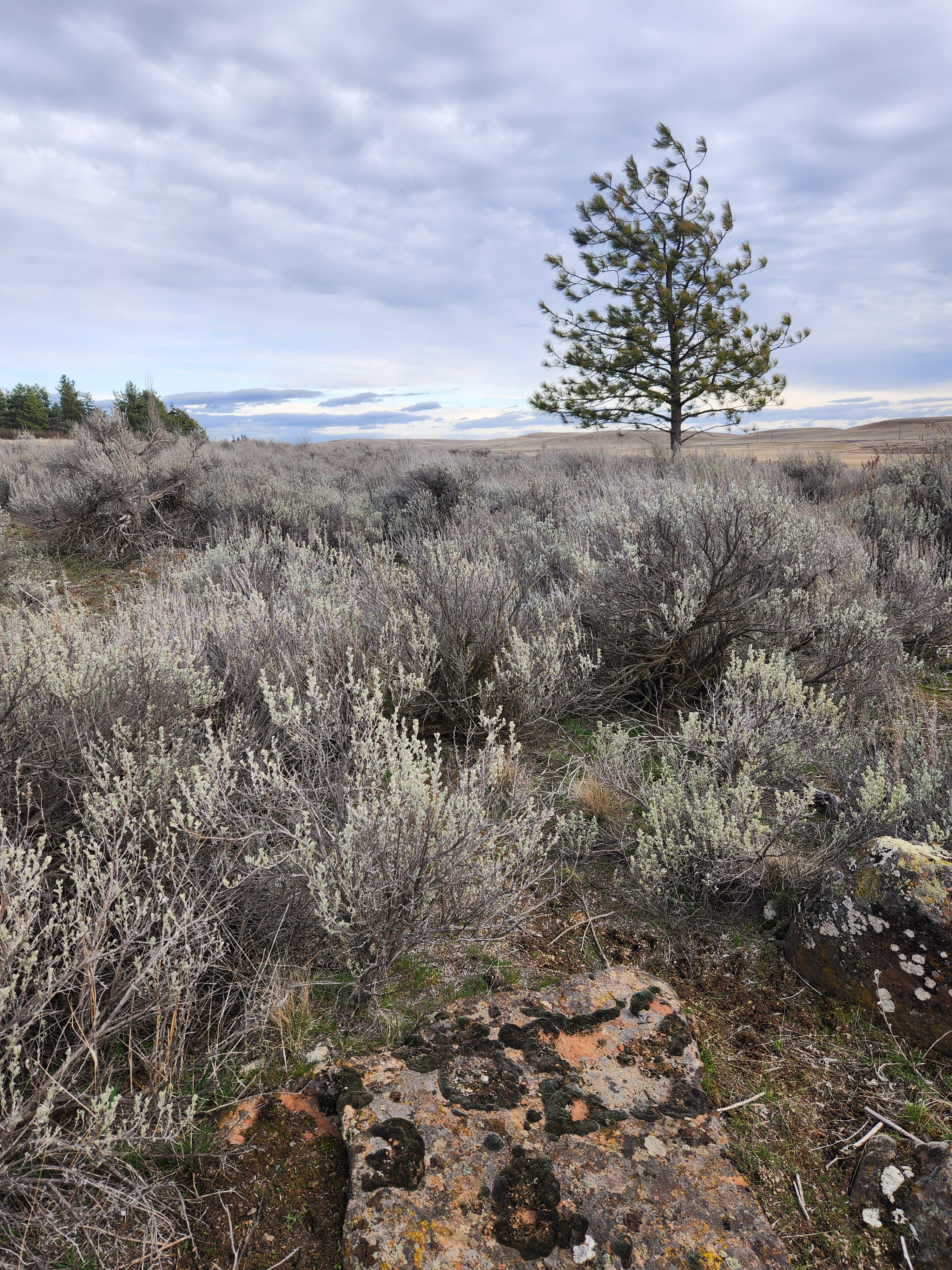
The State of Washington seeks to hand over land once recognized as part of the ancestral Yakama Nation to the Colville Confederated Tribes -- for free. The land was purchased by the state as part of the 1855 treaty with the Yakama Nation.
The still disputed claims accusing Wade King of disturbing alkali wetlands provided an excuse to break the King Ranch lease for cause, a lease that was supposed to run through 2029 and has provided income to the state of Washington for over 70 years. The threats of weighty fines, impossibly high mitigation costs, and a threat of a Special Inquiry judicial proceeding all provided an incentive for the tenants to go away quietly.
Wade King is not a back down and go away quietly kind of guy. He and his wife Teresa King have been fighting the claims since December 2021. When I talked with Wade this week, he described the state’s actions as appearing to be “intended to facilitate transferring the land to the tribe.”
It’s an easy conclusion to reach when the initial accusation came from a Colville tribal member exercising the same rights as any other Washingtonian to access leased out DNR land for recreation.
Breaking the lease for cause clears the way for a Trust Land Transfer (TLT) from the state to the tribe, a method which requires the property first be declared non-income producing, according to Toni Meacham, attorney for Wade and Teresa King. Evicting tenants who have been providing income to the state for 70 years is a simple way to make sure the land isn’t producing any income, but requires a wink and a nod to pretend it’s not capable of producing income in the future.
Assuming there was general agreement the land should be back in tribal hands, there was and still is a transparent path to making it so. It would require the State of Washington to establish the proposed alternative use as providing greater public benefit and/or receiving an equivalent land trade or fair market value purchase price. It would also require the state to compensate the Kings for the value of their improvements to the land.
By breaking the lease for cause, the King Ranch loses the value of 70 years of investment, mostly in fencing, as well as loss of use for grazing. Transferring to the Colville Confederated Tribes also removes the right to public access for hiking, hunting and other recreation and the state loses the lease income.
Theoretically, the state of Washington will buy land elsewhere to fill the income gap to the school trust account from TLT transfers. As a practical matter, as long as the state of Washington keeps outspending its income, a legislative pledge to buy more land is a piecrust promise, easily made and easily broken.
In a draft of her June 2026 article for The Ketch Pen, a publication of the Washington Cattlemen’s Association, Meacham provides the following summary:
“The land was considered underperforming only after the Kings’ lease was unilaterally terminated for alleged wetland damage. In 2023, HB 1460 revitalized the TLT program, allowing transfers to Tribes—previously, transfers were mostly between State agencies.
The expanded TLT program has markedly reduced the Trust property inventory, which holds land for the benefit of Washington citizens. According to DNR, several transfers are active:
· Beckler 6, King County (Tulalip Tribes)
· Okanogan G, Okanogan County (Colville Reservation)
· Tract C East/North/South, Yakima County (Yakama Nation)
· Babcock Bench, Grant County (Washington Dept. of Fish and Wildlife)
· South Lake Ozette, Clallam County (Quileute Tribe)
· Middle Fork Snoqualmie, King County (DNR Natural Areas Program)”
According to Meacham, not all properties on this list were funded in the 2025-2027 Capital budget for replacement parcels to refill the DNR trust portfolio. The state has already dropped the pie.
EPILOGUE
Links are provided at the end of each essay to allow readers of Forthright to check their own interpretations of information, which is a great way to build your skills as a savvier media consumer. Here’s a sample of reporting on the King Ranch case from 2023 to the present. The narrative of the naughty rancher stands out in the general media while reporting in the agricultural media tends to focus on water issues. Judge for yourself.
Spokesman-Review, February 19, 2023: Grant County ranchers fined $268,000 for damaging rare wetlands
Summary: Cites DOE claims of damaged wetlands without mentioning the claims are in dispute. Implies the fines have already been levied without mentioning the administrative appeal process underway. Contains the following quotes from the parties:
“Stephanie May, communications manager for Ecology’s Eastern Region Office, said it isn’t clear why the King Ranch dug up the wetlands.
“We haven’t been able to tell what they were trying to do,” May said. “They haven’t been responsive to us.”
The Kings did not respond to requests for comment.”
The lack of information from the perspective of the Kings and the unquestioning reliance by the reporter on DOE sources demonstrates the first rule of all public relations: Tell your own story or someone else will tell it for you. The article also includes this detail:
“A member of the Confederated Tribes of the Colville Reservation, who was hiking the area in February 2021, alerted the Washington Department of Fish and Wildlife after seeing equipment on federal land.”
Not sure why the reporter referenced federal land. There is or was BLM grazing land in the area, but the reporter does not explain why that is relevant to the King Ranch, state DFW jursidiction or the DNR lease.
The Center Square, October 30, 2024: Digging for the truth: King Ranch owners fight claims of illegal wetlands excavation
Summary: This article covered statements made by attorney Toni Meacham at a Cattle Producers of Washington annual meeting to a roomful of livestock producers. From the article (which I wrote as a freelance piece of straight reporting):
“When the Kings assumed it was a misunderstanding and requested a meeting to discuss the matter, Meacham said they were told there was no further information and they would have to file a request under the Public Records Act.
Email threads released after filing PRA requests indicate that the Departments of Archeology & Historic Preservation and Fish & Wildlife had been discussing the properties since February 2021, including a field visit by WDFW staff.
The Department of Ecology and the Department of Natural Resources, which manages the leases for the public lands portions of the King Ranch, were not brought into the loop until late fall/early winter, according to several email threads.”
“My clients have been zealously pursued by the AG’s office,” Meacham said. “DOE is looking for evidence to fit their narrative.”
Capital Press, January 23, 2026: EPA defends Washington rancher accused of environmental crime
Summary: The Capital Press is a highly regarded weekly newspaper covering all things related to agriculture in the western US, primarily focusing on WA, OR, ID and CA. It has been covering water and riparian issues in the case regularly. Focus of this particular article was a letter sent from the federal EPA to state DOE, triggered by remarks from Secretary of Agriculture Brook Rollins in defense of the King Ranch.
“Ecology alleges King damaged wetlands, but EPA Region 10 Administrator Emma Pokon defended King in a letter to Washington Department of Ecology Director Casey Sixkiller and state Lands Commissioner Dave Upthegrove.
Pokon said she was concerned the state was targeting cattle ranchers. “The EPA recognizes that stock watering ponds are important for supporting livestock operations,” Pokon stated.”
“Ecology tries to work with landowners before taking legal action, Sixkiller said. “Enforcement action is never taken lightly,” he said.
After Ecology began investigating the ranch, DNR ended grazing leases the ranch had held for decades. DNR spokesman Michael Kelly said the department didn’t have a comment on Pokon’s letter.”
“The ranch appealed Ecology’s fine to the Pollution Control Hearings Board. Ecology has not yet filed a response to the appeal.
The Kings are suing DNR in federal and state courts to restore the leases. The ranch claims DNR knuckled under to Ecology.”
Tri-State Livestock News, March 13, 2026: Judge denies injunction in King ranch dispute with Washington Dept of Ecology
Summary: Reporting focused on denial of the preliminary injunction request based on the same Pacific Legal Foundation press release as the Wenatchee World. No mention made of federal involvement. Has direct quotes from Wade King, including this:
“Preliminary reports from a team of experts including a former U.S. Army Corps of Engineers water specialist indicate the sites in question are not wetlands. “These are not wetlands. How can you restore non-wetlands into wetlands?” asked King, rhetorically.
The Kings say that “restoring” their arid desert rangeland into wetlands would be an unsustainable and unachievable goal.
“We’ve tried to get an understanding of what restoration might [be] like from our team of experts,” said King. “One of the things we’d have to do is set up some kind of drip irrigation system to keep ‘wetland plants’ alive. They are talking about continually hauling water to create a wetland where there isn’t one,” he said.
“I remember our experts going out and looking at these sites and saying, ‘shouldn’t a wetland be wet,’” said King.
“Restoring” wetlands would actually be creating a man-made wetland in the region, the Kings say. “This would result in an ongoing expense for us. There is no way of estimating the cost of complying with this order for 10 years and we are well aware that the Department of Ecology will always be moving the goal post. Ten years won’t be enough for them, nothing will be enough,” said King.”
Spokesman-Review, March 25, 2026 (a reprint from the Wenatchee World): Central Washington ranchers fight state over wetland penalties
Summary: Focuses on denial of the preliminary injunction request by Wade and Teresa King for a jury trial; recaps the DOE claims leading to the fight and the King Ranch rebuttal based on a Pacific Legal Foundation press release. No mention made of federal involvement. No mention made of the Trust Lands Transfer program. https://pacificlegal.org/press-release/judge-denies-injunction-but-jury-trial-fight-continues/
It was curious why no statement was included from DOE; this may be related to a new policy out of the governor’s office slowing the ability of state agencies to answer reporter’s questions. Even curiouser is the governor’s office telling agencies not to tell anyone the delay is driven by Gov. Bob Ferguson: https://www.msn.com/en-us/news/politics/tremendous-bottleneck-wa-gov-ferguson-s-new-approval-policy-stalling-public-information/ar-AA224nCq
BACKGROUND LINKS
Treaty with the Yakama Nation, 1855: https://treaties.okstate.edu/treaties/treaty-with-the-yakima-1855-0698
DNR Land Transfers, current and planned:
https://dnr.wa.gov/land-transactions/trust-land-transfer/proposed-and-current-transfers
Toni Meacham, Attorney at Law: https://tonimeacham.com/
Pacific Legal Foundation: https://pacificlegal.org/press-release/judge-denies-injunction-but-jury-trial-fight-continues/
The Ketch Pen: https://www.washingtoncattlemen.org/ketch-pen
King Ranch case updates: https://www.savekingranch.com/
Theft by any other name is theft and if they keep resisting it will become armed robbery
Bill R